
 Are you a serial plant killer? Join the club—most of us have a closet full of plant skeletons. Before people decide to give up on their pursuit of creating a plant sanctuary, they deal with a lot of heartbreak and a shaken sense of confidence. These unpleasant feelings are, in part, the reason why the artificial plant industry is growing. Like it or not—some people just can’t keep a plant alive. So, instead of sacrificing yet another beautiful ficus, it’s better to change gears and opt for no-maintenance greenery. But you shouldn’t buy just any artificial plant. Like most things, there are low and high-quality products on the market, and telling them apart isn’t as easy as you’d think.
5 Tips to Choose a High-Quality Artificial Plant
The rise of the artificial plant industry brought forth a lot of misinformation. People with no green thumbs rush to decorate their homes with little regard for the quality they’re paying for. Despite what most people think, not all artificial plants are made equal. While many look alike, they differ greatly in material quality, durability, UV protection, price, and versatility. But as a newbie—how will you tell which faux plant is worth its weight?
Follow these 5 simple tips:
- Look for pliable foliage
Your fake plants shouldn’t scream “I’M FAKE” at everyone entering the room. They should be believable from up close and even more so from afar. To get a high-quality artificial plant that looks real, you’ll need to check whether the product is pliable and flexible. Faux plants should mimic real movement so that they look alive. If you get a plant that’s stiff and rigid, your efforts will be in vain.
If your faux plants are bendable, bust out a photo of the real-life version and bend the leaves of your replica to make it look like the real thing.
- Choose leafy over flowery
Artificial greenery is much more believable than any kind of artificial flower. If you’re not experienced with artificial foliage, get a faux leafy plant that doesn’t have many different colors. While colorful foliage looks great, it’s much easier to tell it’s fake than when it’s completely green. Typically, leafy green plants are indoor plants like pothos and monsteras, so you can start with an artificial version of them. Or, you can opt for a more creative solution with a trailing artificial hanging plant in various shades of green. Because they hang from the ceiling, they tend to be very convincing.
- Look for imperfections
Not to avoid them—but to choose them. A realistic artificial plant can’t be perfect because a real plant isn’t, either. Nothing in nature is perfect, so if you want a natural appearance in your space, you need inconsistencies. Think about it—have you ever seen a plant with a uniform color, identical leaf shape, or completely straight stems? Exactly, those don’t exist. So, your chosen artificial plant shouldn’t look like it’s been painted. Rather, it should seem like it’s been plucked straight from your garden and displayed in your space, warts and all. 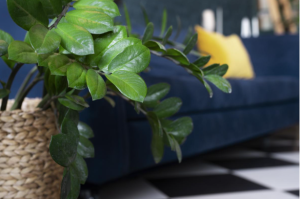
- Ask for certifications
While there are no industry-accepted certifications and regulations, you can still vet the artificial plant manufacturer. Since there are a few certifications reputable suppliers possess, such as RoHS and REACH, check to see if your chosen seller has them before buying. If they showcase their document-certified compliance, chances are, they’ve undergone rigorous testing and can attest to the quality of their stock with proof. Unfortunately, anyone can say anything online, so the industry is littered with lofty claims with no backing. In most cases, it’ll be up to you to snuff out the lies and do business with a respectable seller.
- Mind the UV-resistance
Artificial plants don’t need sunlight to survive. Yet, if you want to convey realism with your faux foliage, you’ll need to mind the location you place it in. It’s not the best idea to position your plant in a dark and dingy corner of the room that never sees the light of day. But, you can place it in a sunny spot, especially if it’s UV-resistant. A high-quality outdoor artificial plant should be treated with UV-resistant coatings that prevent it from fading or cracking under the sun. This embedded feature protects the artificial plant from turning blue in a few months and keeps it vibrant for years.
Finishing Thoughts
The artificial plant industry has been growing rapidly for the past several years. For the black thumbs, this is great news because more plant lovers can now enjoy the beauty of nature without killing more innocent greenery. But since not all artificial plants are made equal, you’ll need a new set of skills to separate apples from oranges and determine which faux plant is high quality.
While there are more tips to share, for your first purchase, focus on the ones we’ve outlined above. Once you have more experience under your belt, you’ll be able to discern the difference much easier.
Note: This is a collaborative post

No Comments